

The mechanics of retrieval, what actually gets pulled into an answer, and how PR teams can influence it.
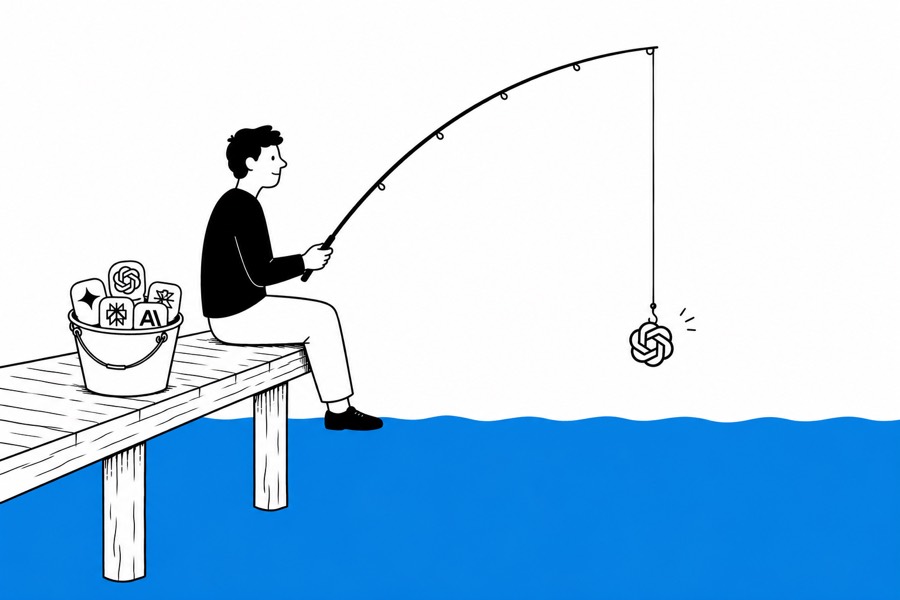
An AI answer isn't generated from nothing
When someone asks ChatGPT or Perplexity a question about your category, the model isn't reciting something it memorized during training. For anything current — pricing, comparisons, recent news, "best of" questions — it retrieves a handful of sources first, then writes the answer from what it found. Whether you show up depends entirely on whether your brand appears in that retrieved set, not on how good your last press release was.
That's the mechanical difference between the search era and the answer era. A search engine handed the reader ten links and let them decide. An answer engine decides for them, and it only decides from what it retrieved.
What actually gets pulled in
Retrieval favors outlets the model already treats as reliable for a given topic, structured content it can parse cleanly, and — increasingly — recency. An outdated page that once ranked well in search can be invisible to an AI answer if there's a fresher, better-structured source saying the same thing. This is why an AI Citation Score, which tracks how often an outlet is actually pulled into answers for your topics, is a different signal than domain authority or traffic. Some publications with modest readership get retrieved constantly, because the model has learned to trust their structure and accuracy on that specific subject.
Where PR still has leverage
You can't buy your way into retrieval, but you can influence the inputs the same way PR has always influenced coverage: by getting placed in the outlets the models already trust for your category, and by making sure what's written is specific enough to be useful when it's retrieved. A vague mention buried in a roundup rarely gets pulled into an answer. A clear, citable claim — a number, a named capability, a direct comparison — is exactly the kind of sentence a model lifts.
This is also why pitching the same ten "prestige" outlets regardless of topic stops working. The outlets that get cited change by category and even by specific question, which is the whole reason to track citation per topic rather than assume last year's tier-1 list still applies.
The practical version
Find out which outlets are actually being cited for your specific topics, not your industry in general. Pitch the journalists at those outlets, not just the ones with the biggest readership. And write pitches that produce citable sentences — a number, a named comparison, a concrete claim — because that's the raw material a model actually pulls into an answer.
hello@newpr.ai — questions, tips, or a story we should be covering.